What Makes Silicone Rubber Heaters Effective?
Silicone rubber heaters deliver flexible heating, precise temperature control, easy installation, and reliable performance for industry.
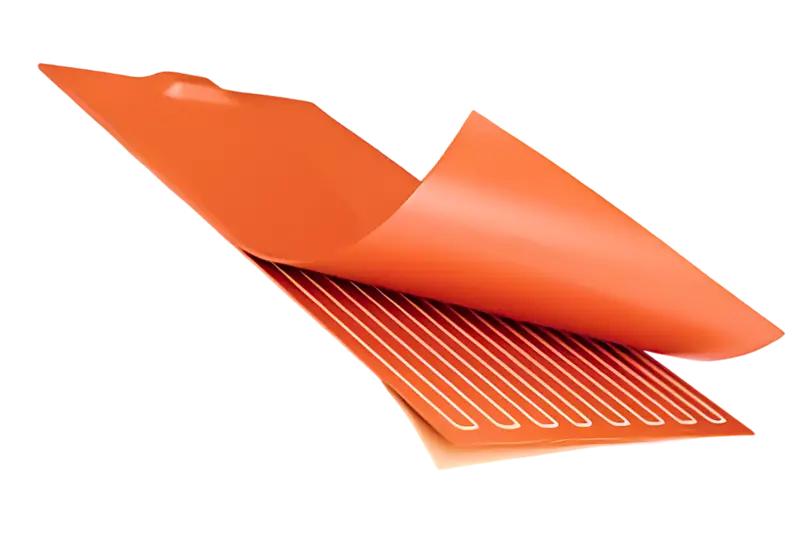
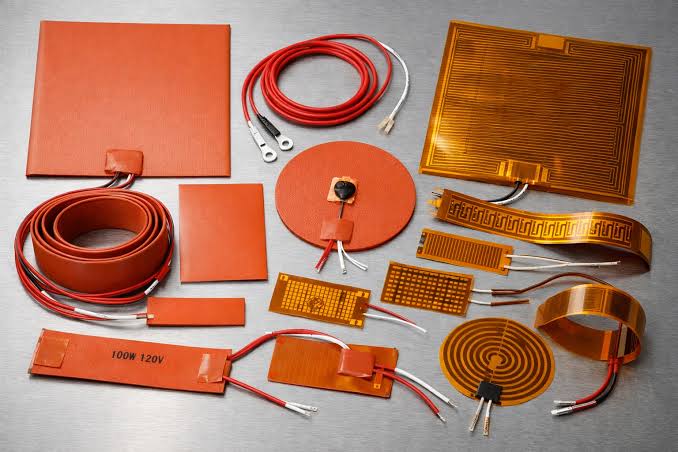
Silicone rubber heaters convert electrical energy into controlled surface heat through embedded resistance elements. Their flexible construction allows close contact with equipment surfaces. A typical design contains a resistance circuit between thin insulating silicone layers. When electrical current passes through the resistance circuit, electrical energy becomes thermal energy. Engineers calculate resistance from voltage, wattage, and required heating output. Copper conductors commonly connect the resistance circuit to the power supply. Silicone insulation protects electrical elements while transferring heat toward the target surface. This structure creates a thin heating solution with relatively low thermal mass. Close surface contact also reduces unnecessary air gaps between the heater and equipment. Proper watt density remains essential because excessive local power can create damaging hot spots.
Why Flexible Heaters Fit Complex Surfaces
Flexible construction gives silicone heaters an advantage on curved and irregular equipment. Rigid heating elements often require dedicated structures for complex surfaces. A flexible heater can conform closely to tanks, pipes, battery housings, and instrument panels. Silicone also tolerates moderate movement better than many brittle insulating materials. However, flexibility does not mean unlimited bending capability. Designers should specify the minimum bend radius before production. Sharp folds can damage internal resistance paths or create concentrated mechanical stress. Heater dimensions should match the usable heating area rather than the entire equipment size. Accurate dimensional matching improves contact and reduces uncovered cold zones. For cylindrical applications, engineers should consider circumference, heater width, seams, and cable routing together. These details directly affect installation quality and long-term electrical reliability.
How Silicone Rubber Heaters Improve Temperature Uniformity
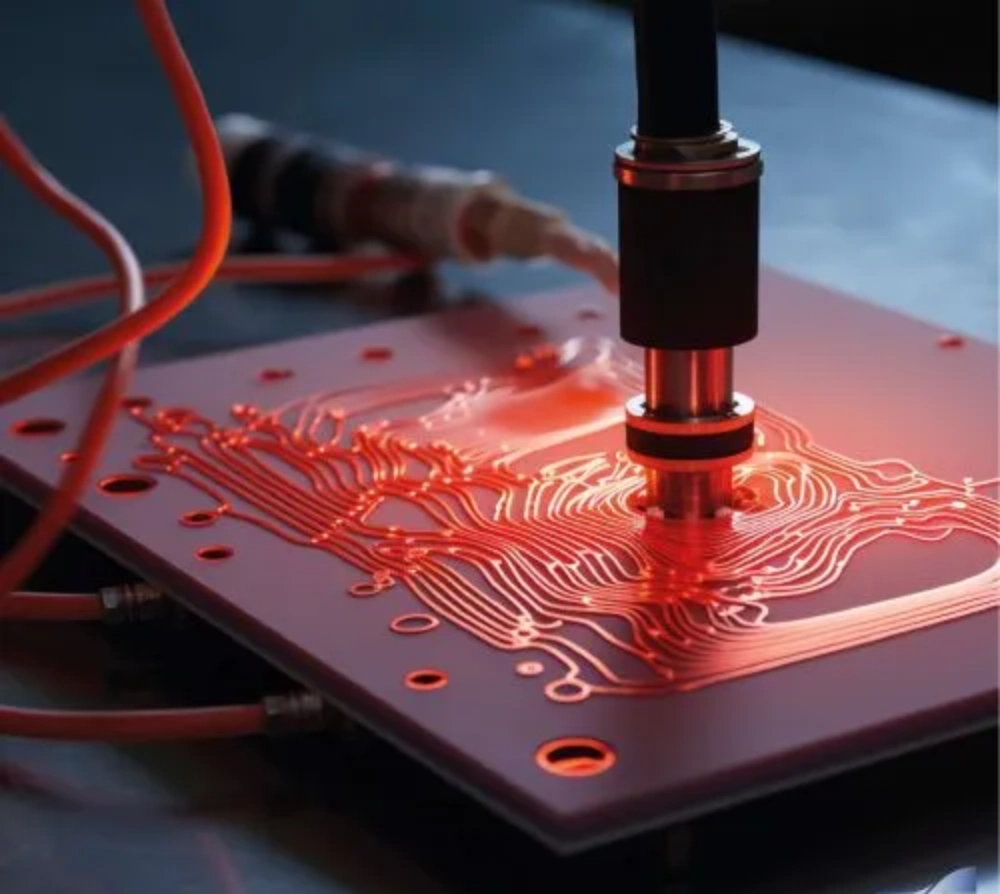
Temperature uniformity depends heavily on resistance layout and heat transfer conditions. A carefully distributed resistance pattern spreads thermal output across the intended heating zone. Designers can vary resistance spacing to compensate for different heat losses. Areas near edges may require different layouts because exposed surfaces release heat faster. Mounting pressure also influences temperature transfer between the heater and equipment. Poor contact creates small air pockets that act as thermal barriers. Temperature sensors should measure the equipment surface rather than an unrelated location. RTD sensors provide stable resistance-based temperature measurements across many industrial applications. Thermocouples can provide fast responses where rapid temperature changes matter. Independent thermal cutoffs can provide another protection layer against abnormal temperature increases. These combined controls help maintain stable operating conditions during changing loads.
Which Materials Affect Heater Performance?
Material selection determines thermal stability, flexibility, electrical insulation, and environmental resistance. Silicone rubber provides a flexible insulating structure around the internal resistance circuit. Its elastic properties allow the heater to follow moderate surface movement during operation. Resistance alloys determine how much electrical energy becomes heat at a specific voltage. Copper conductors mainly transport current from the power source to the resistance circuit. Adhesive layers can improve surface contact when permanent installation suits the application. Glass fiber reinforcement can increase dimensional stability in selected constructions. Engineers must also consider lead insulation, connector materials, and strain relief. Each component experiences temperature cycles during normal operation. Material compatibility becomes especially important when equipment contains oils, cleaning chemicals, moisture, or vibration. A well-matched material system can reduce premature cracking, delamination, electrical leakage, and connection failures.
What Installation Factors Control Heating Efficiency?
Installation quality strongly affects actual heating performance. Even a precisely designed heater can perform poorly when contact remains uneven. Engineers should verify several conditions before applying power.
- Confirm heater dimensions against the actual heating surface.
- Remove dust, oil, moisture, and loose particles before installation.
- Eliminate unnecessary air gaps between the heater and target surface.
- Keep cables away from sharp edges and excessive bending points.
- Verify the specified voltage before connecting the power supply.
- Check sensor placement against the required control temperature.
- Confirm mounting methods can withstand repeated thermal cycling.
These checks reduce avoidable thermal resistance and mechanical stress. Surface preparation matters particularly when adhesive bonding provides the main attachment method. Contamination can weaken adhesion and create small lifting areas. Those lifted areas can restrict heat transfer and concentrate thermal energy elsewhere. Mechanical mounting requires similar attention to pressure distribution. Excessive compression can damage flexible structures, while insufficient pressure can create air gaps. Cable exits also require suitable strain relief. Proper routing prevents repeated pulling forces from reaching electrical connections. Installation therefore becomes part of the thermal design rather than a separate final step.
How Controllers and Sensors Prevent Overheating
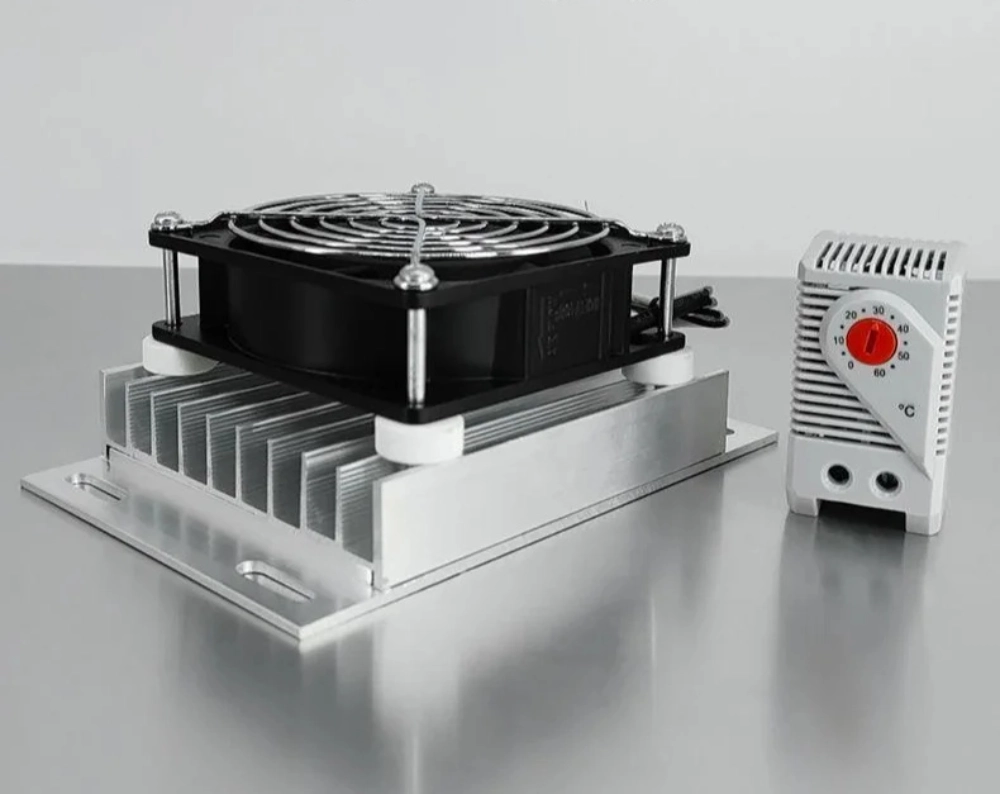
Temperature control determines whether heating output remains within the required operating range. Basic thermostats switch power around a defined temperature point. PID controllers can continuously adjust output according to measured temperature error. Sensor placement strongly influences control accuracy because the controller responds to measured conditions. A sensor mounted too far from the heated surface may react slowly. A sensor placed directly over a resistance path may record an unusually high local temperature. Independent over-temperature devices provide protection when a primary controller fails. Designers can also divide large heating surfaces into multiple controlled zones. Each zone can respond to different heat losses or operating requirements. Control parameters should match the heater's thermal response and equipment heat capacity. Proper calibration remains important after installation, especially when production equipment operates under changing loads.
Real Case: Heating a Battery Enclosure Surface
A practical example involves battery equipment operating in cold outdoor environments. Low temperatures can increase internal resistance and reduce available battery performance. Engineers may apply silicone rubber heaters beneath or around the battery enclosure. The heater raises the enclosure temperature before demanding operating conditions occur. A surface-mounted temperature sensor can regulate output without directly measuring the resistance circuit. Designers must account for enclosure insulation, ambient temperature, battery heat generation, and allowable surface temperature. The heating area should cover the region where temperature stability matters most. A similar approach applies to outdoor instrumentation requiring controlled startup temperatures. Engineers can also evaluate the DJR-S Aluminum Alloy Heater Series when rigid aluminum construction suits the thermal interface. This example shows why heater selection depends on equipment geometry and operating conditions.
How Flexible Heaters Handle Industrial Environments
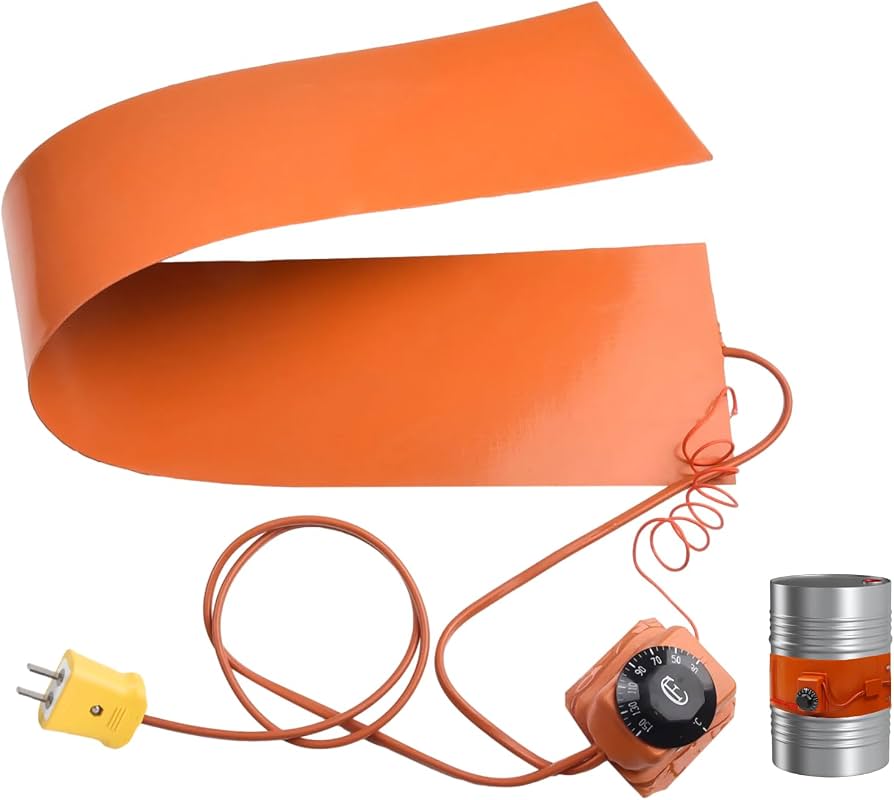
Industrial equipment can expose heating components to moisture, vibration, dust, oils, and repeated temperature cycles. Silicone insulation offers useful flexibility and environmental resistance for many industrial applications. However, engineers should evaluate the actual chemical and thermal environment before selecting materials. Continuous exposure can affect elastomers differently from short-term contact. Vibration also creates mechanical stress around cable exits and mounting points. Repeated expansion and contraction can gradually affect adhesive bonds and electrical connections. Enclosure protection requires separate consideration because the heater itself does not automatically determine system IP protection. Surface temperature, humidity, condensation risk, and cleaning procedures should all enter the specification. Applications involving washdown may require sealed connections and suitable external protection. Outdoor equipment may also require UV-resistant construction and protected cable routing. Environmental testing should reproduce real operating conditions whenever long service life matters.
How to Select Power Density and Heater Size
Heater sizing starts with the required heat load rather than simply choosing maximum wattage. Engineers should estimate heat losses through conduction, convection, radiation, and equipment interfaces. Ambient temperature establishes the starting point for thermal calculations. Target temperature determines the required temperature rise. Surface area then affects how much wattage the heater can distribute safely. Watt density provides a useful way to compare heating intensity across different heater sizes.
| Selection Factor | What to Check | Why It Matters |
|---|---|---|
| Heating Area | Usable surface dimensions | Determines coverage and heat distribution |
| Voltage | Available supply voltage | Determines electrical resistance requirements |
| Power | Total required wattage | Controls available heating capacity |
| Watt Density | Power per heated area | Helps limit excessive local temperatures |
| Target Temperature | Required operating temperature | Defines the thermal objective |
Higher watt density can shorten warm-up time, but excessive density can increase thermal stress. Lower density can provide gentler heating but may require more surface area. Equipment insulation can significantly change the required power. Thermal calculations should therefore include actual mounting and environmental conditions. Prototype testing can verify heat-up time, surface uniformity, and steady-state temperature before mass production.
What Causes Flexible Heater Failure?
Heating failures often originate from mechanical damage rather than the resistance element itself. Excessive bending can stress the internal circuit near repeated flex points. Sharp installation folds can create concentrated strain within the silicone structure. Poor adhesion can produce air gaps and localized temperature increases. Incorrect voltage can also increase electrical power beyond the intended design level. Controller failures create another important risk because continuous heating can exceed equipment temperature limits. Cable exits require careful strain relief because repeated pulling can damage internal electrical connections. Thermal cycling may gradually weaken adhesive layers or flexible materials. Chemical exposure can also change surface properties when the material lacks suitable resistance. Engineers should inspect resistance values, insulation condition, cable connections, and surface attachment during maintenance. Tracking temperature behavior over time can reveal gradual degradation before complete electrical failure occurs.
How Flexible and Rigid Heating Elements Differ
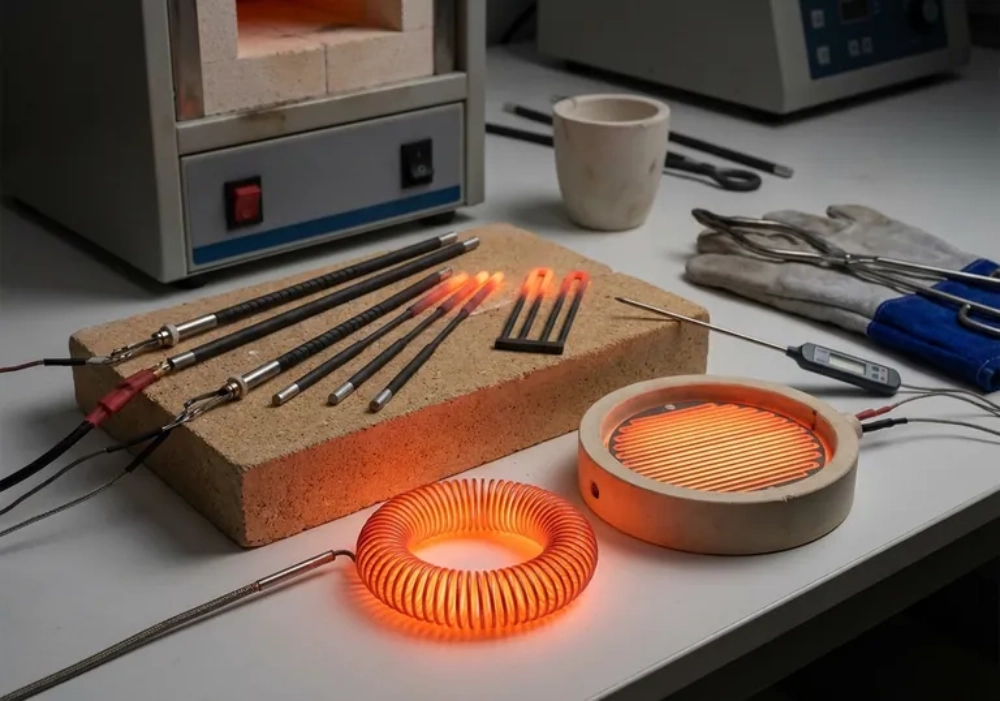
Flexible heaters and rigid heating elements solve different engineering problems. Flexible designs suit curved surfaces, restricted spaces, and applications requiring close surface contact. Rigid elements can provide structural strength and may suit fixed mounting arrangements. Ceramic elements often tolerate high temperatures but require careful mechanical handling. Metal heaters can provide strong thermal output where rigid geometry matches the equipment. Silicone construction offers useful flexibility when equipment dimensions or surfaces vary. Selection should consider temperature range, geometry, available space, mounting method, control requirements, and maintenance conditions. The following comparison highlights several practical differences.
| Factor | Flexible Silicone Construction | Rigid Heating Construction |
|---|---|---|
| Surface Shape | Curved and irregular surfaces | Best with defined rigid surfaces |
| Mechanical Flexibility | High within specified limits | Usually limited |
| Installation Space | Thin and space-efficient | May require additional clearance |
| Heat Distribution | Designed across flexible surface areas | Depends strongly on element geometry |
| Customization | Supports varied shapes and layouts | Often requires dedicated tooling |
The comparison shows why application geometry should influence heater selection. Flexible construction does not automatically outperform rigid construction in every application. High-temperature industrial systems may require materials outside normal silicone operating ranges. Conversely, compact equipment may benefit substantially from thin conformable heating surfaces. Engineers should evaluate the complete thermal system rather than comparing heater types through one specification.
How to Specify Flexible Heaters for Production
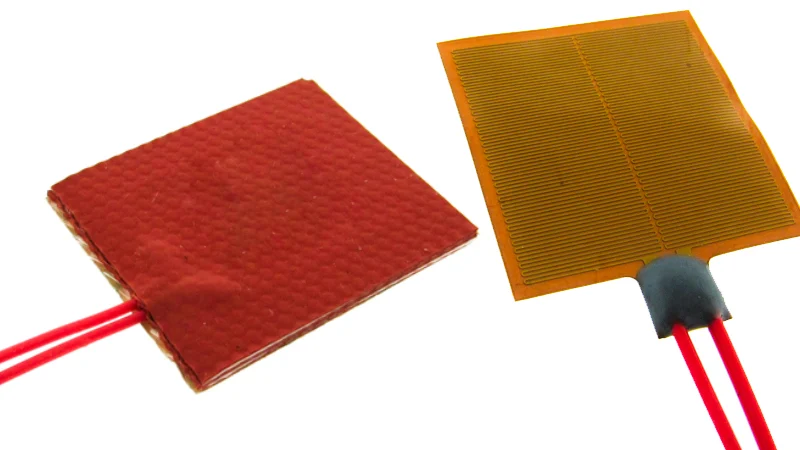
Production specifications should define every parameter affecting electrical and thermal performance. Required dimensions should include length, width, thickness, hole locations, cutouts, and cable exits. Electrical specifications should identify voltage, wattage, resistance, tolerance, and connection requirements. Thermal specifications should include operating temperature, maximum temperature, warm-up expectations, and control method. Engineers should also specify sensor type, sensor location, adhesive requirements, and mounting constraints. For projects requiring rigid metal heat transfer, buyers may evaluate the DJR-S Alloy Heater as another component option.
Prototype testing should measure actual surface temperature rather than relying only on calculated output. Thermal imaging can identify uneven heating and unexpected hot spots. Production testing should verify resistance, insulation integrity, dimensions, and electrical connections. Consistent inspection criteria can reduce variation between production batches. Clear specifications also make OEM and ODM communication more efficient because suppliers can evaluate requirements before tooling.
How Silicone Rubber Heaters Support Production Reliability
Silicone rubber heaters can support reliable thermal management when engineers match design parameters with actual equipment conditions. Proper sizing prevents unnecessary electrical loading and excessive surface temperatures. Accurate resistance layouts help distribute heat across the required area. Suitable sensors keep operating temperatures within defined limits. Correct mounting improves thermal transfer while reducing mechanical stress. Environmental evaluation protects materials from moisture, chemicals, vibration, and repeated cycling. Production quality control should verify electrical resistance and insulation performance for every batch. Dimensional inspection also confirms that heaters fit the intended equipment consistently. Thermal testing can reveal differences between calculated and actual heating behavior. These checks become particularly valuable when heaters operate continuously or protect temperature-sensitive equipment. A complete specification should therefore combine electrical, thermal, mechanical, environmental, and installation requirements. Such coordination helps manufacturers produce heating components that perform consistently within their intended application.
FAQ
What temperature can silicone rubber heaters reach?
Operating temperature depends on silicone material, resistance design, watt density, mounting method, and control systems. Many industrial designs operate across moderate temperature ranges. The manufacturer's continuous operating limit should determine the permitted working condition. Surface temperature can differ from internal resistance temperature. Poor contact may create higher local temperatures even when the controller shows an acceptable average value. Engineers should define both normal operating temperature and maximum allowable temperature. Independent over-temperature protection provides additional safety for critical equipment. Thermal testing should confirm the actual temperature profile under realistic environmental conditions. A heater designed for one temperature range should not automatically serve a higher-temperature application. Engineering validation remains necessary when operating conditions change significantly.
How long do silicone rubber heaters typically last?
Service life depends on operating temperature, thermal cycling, mechanical stress, electrical loading, installation quality, and environmental exposure. Moderate temperatures generally place less stress on silicone insulation and internal resistance circuits. Repeated sharp bending can shorten service life even when operating temperatures remain acceptable. Adhesive performance can also influence reliability when bonding provides the primary mounting method. Moisture, chemicals, vibration, and cable movement may accelerate degradation. Correct power density reduces unnecessary thermal stress across the heating surface. Preventive inspection can identify resistance changes, damaged insulation, loose connections, or lifting edges. Actual service life therefore varies significantly between applications. A properly specified heater can provide reliable operation when electrical, thermal, mechanical, and environmental limits remain controlled.
Can silicone rubber heaters be customized for industrial equipment?
Yes, manufacturers can customize many heater characteristics for industrial equipment. Common options include length, width, shape, voltage, wattage, resistance value, sensor location, cable length, and mounting method. Cutouts and irregular profiles can accommodate equipment features that standard heating pads cannot cover. Designers can also modify resistance layouts to distribute heat across specific zones. OEM and ODM projects normally begin with equipment drawings and technical requirements. Prototype samples allow engineers to verify dimensions, temperature uniformity, warm-up behavior, and installation compatibility. Production specifications should document approved materials, electrical tolerances, inspection procedures, and connection details. Customization works best when thermal requirements and mechanical constraints receive equal attention. This approach helps align the heater with actual equipment instead of forcing equipment to accommodate a generic component.