What Impacts Locking Force In Indoor Electromagnetic Locks?
Indoor electromagnetic lock locking force in industrial systems depends on coil design, air gap, power stability and materials.
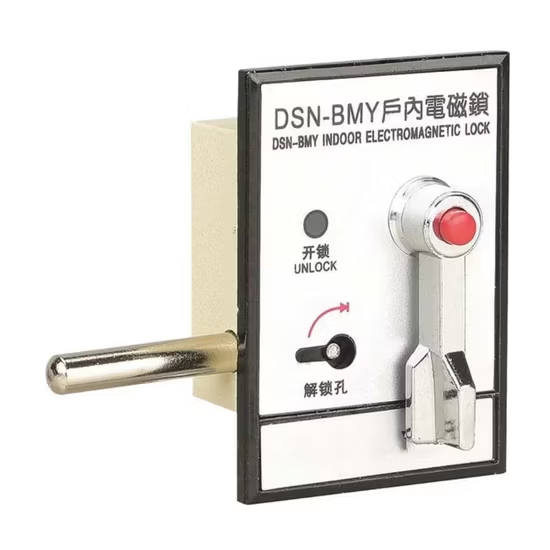
The indoor electromagnetic lock locking force in industrial electrical systems defines security stability for controlled environments. It ensures that energized coils maintain stable attraction between armature plates and magnetic cores. Industrial facilities rely on consistent force output to secure switchgear rooms and automation cabinets. Unlike commercial locks, these systems operate under continuous electrical load conditions. Engineers evaluate thermal stability, magnetic saturation, and structural alignment. The indoor electromagnetic lock locking force directly affects safety in energized zones.
It also determines resistance against vibration in industrial plants. Consistent force output ensures controlled access in high voltage environments. Design engineers prioritize electrical stability and mechanical precision for long-term reliability.
Electromagnetic Field Generation Principles
Magnetic force originates from coil excitation inside the lock body. Electric current flows through copper windings and produces magnetic flux. Flux density increases with stable current input and optimized coil geometry. A compact magnetic circuit reduces leakage and improves holding efficiency. Industrial systems require high permeability steel cores for stronger field concentration. The indoor electromagnetic lock locking force depends heavily on flux uniformity. Air gaps reduce field strength and lower attraction efficiency. Engineers design laminated cores to minimize eddy current losses. Precise winding density ensures stable magnetic response under continuous operation. Efficient field generation supports long-term industrial reliability in electrical control environments.

Electrical Input And Stability Factors
Stable electrical input determines consistent locking performance in industrial systems. Voltage fluctuation directly impacts magnetic saturation levels inside the coil. A drop in voltage reduces field strength and weakens holding capacity. Current instability creates uneven magnetic response across the contact surface. Engineers use regulated DC power supplies to maintain stable output. Ripple control circuits reduce interference in sensitive electrical environments. The indoor electromagnetic lock locking force decreases when power quality drops below design thresholds. Industrial environments often include multiple loads that create voltage disturbances. Proper circuit isolation improves performance consistency. Stable input ensures predictable locking behavior in mission critical systems.
Material And Contact Surface Engineering
Material selection strongly influences magnetic attraction efficiency in industrial locks. Armature plates use low carbon steel for high magnetic permeability. Surface flatness ensures full contact with the magnetic core. Micro gaps significantly reduce effective force output. Precision grinding improves surface consistency at microscopic levels. Coating layers prevent corrosion without reducing magnetic performance. The indoor electromagnetic lock locking force depends on uniform contact pressure. Uneven surfaces create localized flux leakage. Engineers measure flatness tolerance within micrometer ranges. Strong material selection ensures stable performance under continuous industrial operation. Proper finishing techniques improve long term durability and force consistency.
Installation Accuracy And Air Gap Control
Installation precision directly affects electromagnetic locking efficiency in industrial environments. Even small alignment errors increase the air gap between components. Larger gaps reduce magnetic attraction exponentially. Mounting brackets must ensure rigid positioning under vibration conditions. Engineers calibrate alignment during system installation phases. The indoor electromagnetic lock locking force depends heavily on minimal air separation. Structural misalignment leads to uneven pressure distribution. Installation teams use gauges to verify spacing accuracy. Mechanical stability prevents long term drift in positioning. Correct installation ensures optimal magnetic coupling between components. Industrial systems require strict tolerances to maintain reliable security performance.
Environmental And Electrical Interference Factors
Environmental conditions influence electromagnetic performance in industrial systems. Temperature changes modify coil resistance and current flow behavior. Higher temperatures reduce magnetic efficiency over time. Humidity introduces leakage currents in sensitive circuits. Industrial electromagnetic interference disrupts stable signal transmission. Shielding techniques reduce EMI effects in electrical rooms. The indoor electromagnetic lock locking force decreases under unstable environmental conditions. Engineers design enclosures to maintain thermal balance. Ventilation systems help stabilize internal operating temperature. Controlled environments improve long term reliability. Environmental control ensures consistent performance in high demand industrial applications.
Power Supply And Control Design
Power supply architecture determines system reliability in industrial locking systems. Regulated DC units provide stable voltage output. Surge protection circuits prevent damage from electrical spikes. Backup power systems maintain operation during outages. Smart controllers adjust current based on load conditions. The indoor electromagnetic lock locking force remains stable under optimized power design. Ripple suppression improves magnetic consistency. Industrial-grade converters ensure long term durability. Redundant systems increase operational safety in critical environments. Proper control design minimizes performance degradation. Electrical stability directly enhances locking reliability in industrial access systems.
| Factor | Effect on Locking Force | Industrial Impact Level |
|---|---|---|
| Voltage Stability | Controls magnetic saturation consistency | High |
| Air Gap Size | Affects flux density directly | Very High |
| Surface Flatness | Determines contact efficiency | High |
| Temperature Drift | Changes coil resistance | Medium |
The comparison shows how electrical and mechanical factors interact. Air gap control delivers the highest impact on system performance. Voltage stability supports consistent magnetic output in industrial environments. Surface engineering ensures reliable contact efficiency over long operation cycles. Temperature effects remain secondary but still influence performance drift. Engineers combine all variables to optimize system reliability. Industrial design requires balancing electrical precision with mechanical stability. These relationships define real world locking behavior in critical infrastructure systems.
List Of Key Engineering Factors
- Coil resistance stability under thermal load
- Magnetic core permeability consistency
- Armature surface precision finishing
- Installation alignment tolerance control
- Power supply ripple reduction design
Each factor directly influences industrial locking stability. Engineers evaluate them during system design and deployment. Small deviations in any factor reduce efficiency significantly. Combined optimization improves long term operational safety. Industrial environments require strict control of all variables. These elements form the foundation of reliable electromagnetic locking systems.
| Design Variable | Optimization Method | Force Improvement Result |
|---|---|---|
| Coil Density | Increased winding precision | Higher magnetic concentration |
| Core Material | High permeability steel | Stronger flux path |
| Surface Finish | Precision grinding | Reduced air gap loss |
| Power Regulation | Low ripple DC supply | Stable force output |
Optimization improves system efficiency across multiple dimensions. Coil design increases magnetic density under stable current flow. Material selection enhances flux transmission efficiency. Surface refinement reduces energy loss at contact points. Power regulation ensures stable long term operation. Industrial systems benefit from integrated engineering improvements. Combined enhancements significantly raise reliability. Each modification contributes to stronger and more stable performance.
Maintenance And Long Term Stability
Regular maintenance ensures stable industrial performance over time. Dust accumulation reduces contact efficiency between surfaces. Mechanical wear gradually increases air gap distance. Engineers schedule periodic calibration to maintain alignment accuracy. Electrical connectors require inspection for resistance changes. The indoor electromagnetic lock locking force can degrade without proper maintenance. Lubrication is unnecessary but environmental cleaning is essential. Inspection routines detect early performance drift. Preventive maintenance extends system lifespan. Industrial reliability depends on continuous monitoring. Proper upkeep ensures consistent locking performance in demanding environments.
Standards And Test Methods
Industrial electromagnetic locks follow strict testing procedures for verification. Force measurement uses calibrated load sensors. Electrical tests confirm stable current response under load conditions. Thermal cycling evaluates long term durability. Insulation resistance tests ensure safety in high voltage environments. The indoor electromagnetic lock locking force must meet minimum industrial thresholds. Standards define acceptable deviation ranges. Repeatability testing ensures consistent performance. Certification processes validate system reliability. Testing ensures compliance with industrial safety requirements. These methods guarantee predictable operation in critical infrastructure systems.
Application Optimization Summary
Industrial applications require system level optimization for best results. Engineers integrate electrical stability with mechanical precision. Installation accuracy determines long term efficiency. Environmental control reduces performance drift. Maintenance programs ensure continuous reliability. The indoor electromagnetic lock locking force serves as a key performance indicator. Integrated design improves safety in electrical control rooms. System coordination enhances operational stability. Proper engineering reduces failure risks. Industrial optimization ensures long term secure access control. Balanced design principles deliver consistent performance in demanding environments.
FAQ
What Is An Indoor Electromagnetic Lock?
An indoor electromagnetic lock is a security device used in industrial electrical systems. It uses energized coils to create magnetic attraction between the lock body and armature plate. This design allows strong holding force without mechanical latches or keys. Industrial systems value fast response, stable operation, and low wear rates. These locks often secure switchgear rooms, control cabinets, and restricted access areas. Proper installation ensures reliable contact and consistent performance. Engineers select models based on voltage, force rating, and environmental conditions.
How Does An Indoor Electromagnetic Lock Ensure Security?
An indoor electromagnetic lock ensures security through constant magnetic holding force. When powered, the coil creates strong attraction between the core and armature plate. This force keeps doors or panels firmly closed during operation. Industrial systems benefit from rapid locking response and stable access control. Integrated sensors can monitor door status and alarm conditions. Backup power systems help maintain security during outages. Proper mounting prevents tampering and alignment loss over time. Reliable control circuits ensure secure performance in demanding industrial environments.
Why does indoor electromagnetic lock locking force decrease over long-term operation?
Force reduction occurs due to thermal cycling, material wear, and electrical instability. Coil resistance increases under repeated heating cycles. Surface contamination reduces contact efficiency over time. Mechanical alignment may drift under vibration conditions. Power supply degradation introduces voltage fluctuations. Environmental factors like humidity accelerate electrical leakage. Industrial maintenance reduces these effects through periodic inspection. Cleaning and recalibration restore partial performance. Long term stability depends on system design and maintenance quality.