How Do PID Temperature Controllers Maintain Stability?
A PID temperature controller maintains precise thermal stability by eliminating overshoot and offset to secure industrial process accuracy.
What Is a PID Temperature Controller
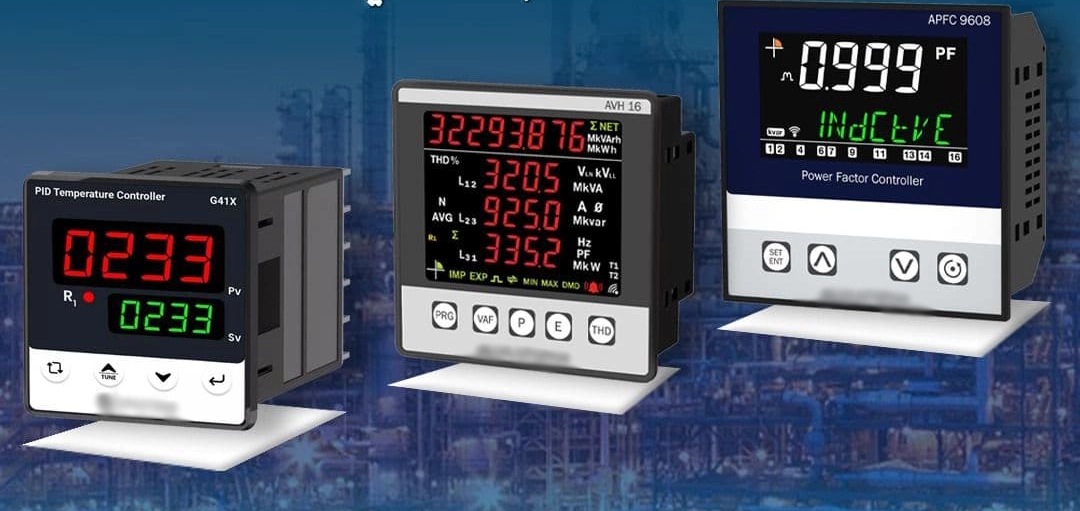
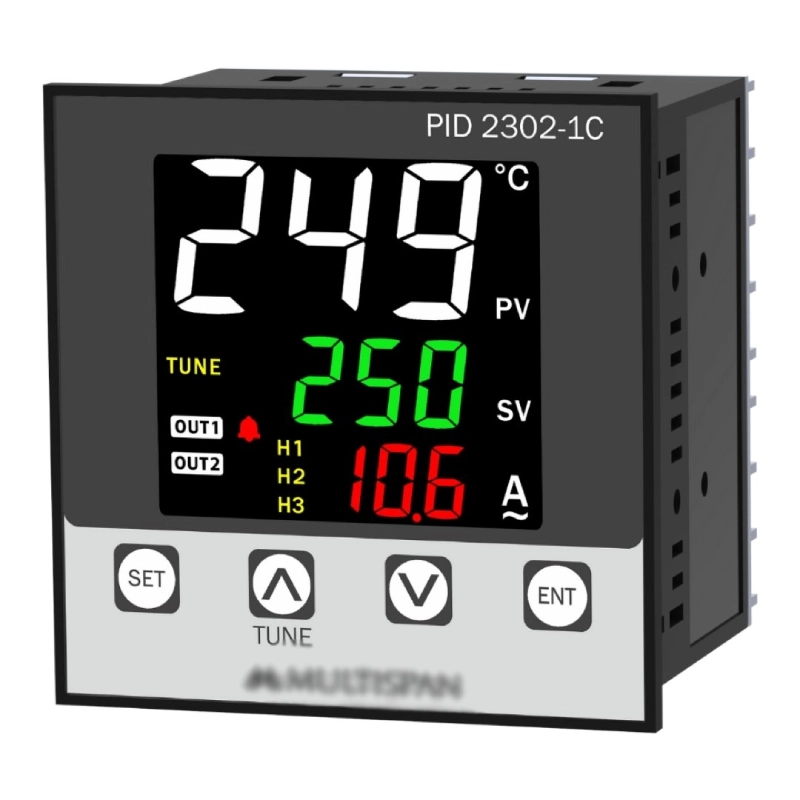
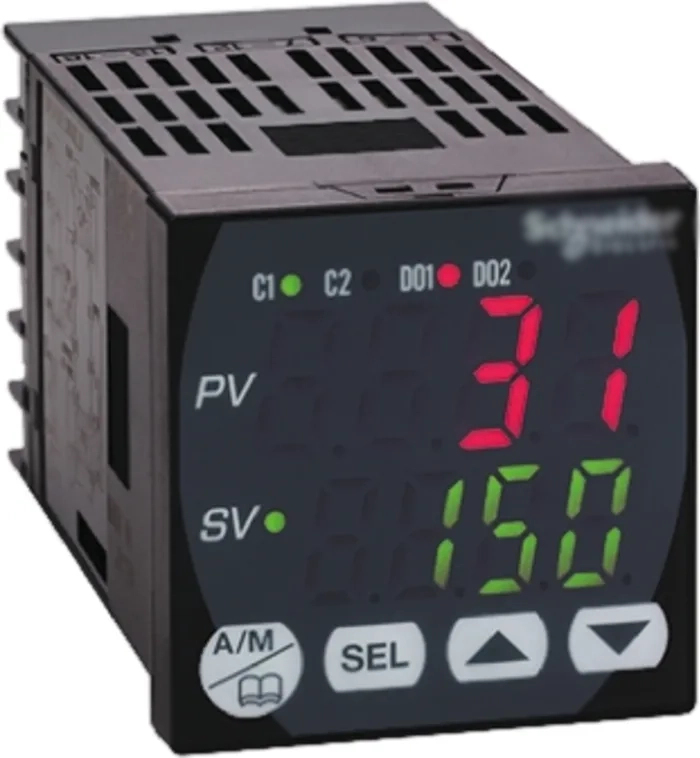
Industrial thermal processes require exact regulation to prevent product defects. Fluctuations in heat can ruin sensitive materials during manufacturing cycles. A standard pid temperature controller solves this issue by continuously calculating system errors. It measures the difference between a desired setpoint and the actual process temperature. The device then applies corrective action to minimize this deviation. Modern facilities utilize these instruments to achieve precise environment control. Constant feedback loops ensure that heating elements receive the exact power needed. Operators can trust this automation to maintain stable thermal conditions. Proper configuration guarantees long-term accuracy and prevents costly thermal damage. This reliable control mechanism is vital for plastic extrusion and semiconductor fabrication. Businesses achieve superior quality output through such advanced automation technologies.
Proportional Action in a PID Temperature Regulator
Proportional action forms the baseline response of any closed-loop thermal regulator. It adjusts output power based on the size of the current thermal error. Large errors trigger a strong response while small deviations receive gentle correction. The controller defines this behavior using a parameter called the proportional band. Narrow bands cause aggressive reactions that might lead to system oscillations. Conversely, wide bands create sluggish responses that fail to reach the target. A major limitation of this single action is steady-state offset. Process temperatures stabilize near the setpoint but never reach the exact value. Additional mathematical control actions must resolve this persistent offset issue. Engineers must balance the proportional gain to avoid massive temperature swings. This setting dictates how fast the heater reacts to sudden environmental changes.
How Integral Action Assists a Digital Thermal Controller
Integral action addresses the steady-state offset left by proportional control. It accumulates the remaining thermal error over a specified period. This mathematical integration forces the output to increase steadily. Even a tiny error will eventually trigger a large corrective response. The controller continues to adjust the power until the error reaches zero. Technicians refer to this parameter as reset time or integral rate. Setting the reset time too short can cause heavy system instability. Rapid integral accumulation leads to severe temperature cycling around the setpoint. Proper calibration ensures the heater achieves the perfect target temperature smoothly. Industrial ovens depend heavily on this corrective mechanism for batch consistency. Removing the persistent offset improves product quality and reduces thermal waste. Consistent temperature zones protect sensitive electronic parts during curing phases.
Why Derivative Action Benefits Closed Loop Thermal Control
Derivative action provides a predictive capability to the PID control loop. It measures the rate of temperature change to forecast future errors. Rapidly rising temperatures cause the derivative term to decrease output power. This braking effect prevents the system from overshooting the desired setpoint. The derivative action acts as a damper to stabilize rapid thermal fluctuations. Heavy industrial machinery requires this dampening to protect delicate heating elements. Implementing a pid temperature controller with active derivative tuning enhances recovery speed. Disturbed processes return to their setpoints much faster with this setting. High electrical noise can disrupt the derivative calculation and cause errors. Filtering the input signal helps maintain clean mathematical derivative calculations. Well-tuned systems enjoy smooth transitions between different heating profiles during operation. Standard manufacturing setups rely on this three-way control to run efficiently.
Comparing Controller Types and Their Efficiencies
| Control Type | Accuracy Level | Overshoot Risk | System Wear |
|---|---|---|---|
| On-Off Control | Low (±5°C) | High | Frequent relay cycling |
| Proportional (P) | Medium (Steady-state offset) | Moderate | Reduced wear |
| Full PID Control | High (±0.1°C) | Minimal | Optimized actuator lifetime |
Analyzing the Comparative Data of Thermal Systems
The comparison table highlights clear differences between standard on-off devices and advanced controllers. On-off devices switch power fully on or off to regulate the heat. This simple switching causes massive temperature swings around the desired setpoint. Such rapid temperature changes wear out mechanical relays very quickly over time. Proportional controllers improve this by throttling the power as the setpoint nears. However, the permanent steady-state offset prevents them from achieving high precision. Full three-term devices combine three separate actions to deliver unmatched thermal stability. They constantly recalculate the error value to fine-tune power output precisely. Using these complex mathematical adjustments keeps industrial processes at exact temperatures without deviation. Consequently, sensitive production lines avoid material spoilage and expensive downtime. Modern facilities prefer these digital solutions to secure consistent manufacturing quality.
Key Components of a PID System
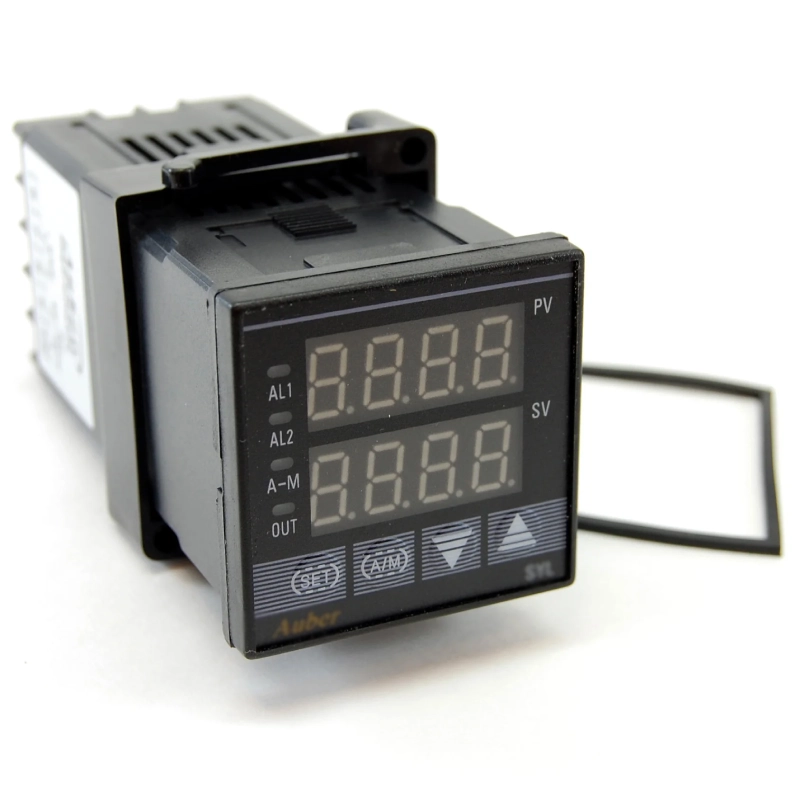
- Temperature Sensor: Thermocouples or RTDs detect the current heat level in the cabinet.
- Controller Core: The microprocessor executes the PID algorithm to calculate error corrections.
- Output Device: Solid-state relays or analog control valves adjust power to the heater.
- User Interface: Digital displays allow operators to set targets and monitor process values.
Explaining the Core Hardware Loop Elements
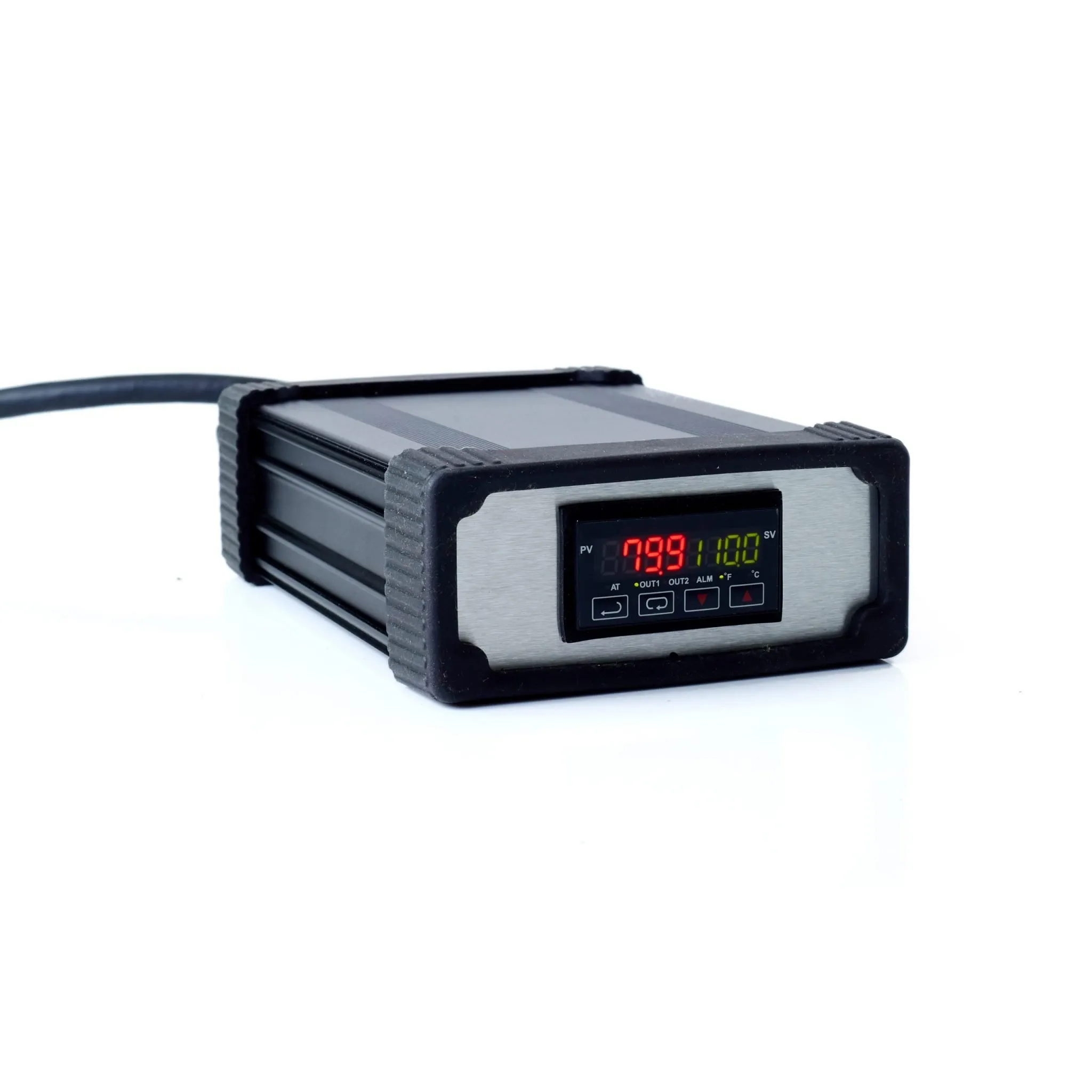
Each component within this feedback system plays a vital role in thermal stabilization. The process starts when the sensor sends raw data to the primary processor. This central processor functions as the brain of the pid temperature controller setup. It calculates the proportional, integral, and derivative terms to determine output changes. For industrial cabinets, the WK Digital Precision Temperature Controller for Cabinets offers unmatched accuracy. The specific controller model manages delicate thermal states with minimal external interference. Control signals travel instantly to a solid-state relay for immediate power adjustments. Relays then switch the heating element on and off at very fast rates. This high frequency prevents thermal lag and stops temperature overshoot before it begins. Accurate sensor readings coupled with fast processors guarantee the ultimate system performance.
Comparing Temperature Sensor Types for Loop Accuracy
| Sensor Type | Temperature Range | Accuracy Class | Response Speed |
|---|---|---|---|
| RTD (Pt100) | -200°C to 850°C | High (Class A: ±0.15°C) | Slower (thermal mass) |
| Thermocouple (Type K) | -200°C to 1250°C | Standard (Class 1: ±1.5°C) | Fast (exposed junction) |
Analyzing Temperature Sensor Performance in Enclosures
Choosing the right sensor ensures the loop receives highly accurate environmental feedback. RTDs provide extreme accuracy but react slower due to their physical construction. Thermocouples handle much higher temperatures and respond instantly to heat changes. The industrial WK Fixed Temperature Controller for Cabinets leverages these differences to optimize performance. This model works perfectly with Type K thermocouples for fast-changing thermal environments. It maintains tight temperature thresholds despite heavy fluctuations in the surrounding air. Selecting the wrong sensor mismatch can ruin overall calibration and cause system drift. Technicians should carefully match sensor response curves to the specific loop parameters. Proper compatibility guarantees that the safety switches trip reliably under emergency conditions. This reliable thermal monitoring prevents equipment burnouts and ensures plant safety.
Best Practices for Tuning Your PID Temperature Controller
Proper tuning is essential to optimize any pid temperature controller for specific industrial environments. Manual tuning involves adjusting proportional, integral, and derivative parameters step by step. Operators use the Ziegler-Nichols method to establish baseline gains for stable operation. This approach requires inducing a small oscillation to calculate ultimate gain. Modern devices offer automatic tuning features that simplify this complex procedure. The controller runs a self-test to analyze the thermal response of the machine. It then sets the mathematical coefficients automatically without risking system damage. Well-tuned loops reduce settling time and maintain precise control during startup cycles. Regular calibration prevents parameters from drifting as physical hardware components age over time. Maintaining highly accurate settings ensures maximum production efficiency and constant product quality.
FAQ
What causes loop instability?
Incorrect gain settings represent the primary cause of industrial thermal control instability. Excessive proportional gain makes the heater overshoot and cycle continuously. This creates a continuous wave of temperature changes. Short reset times accumulate error too rapidly. Rapid accumulation forces the controller to overcorrect. Thermal lag between the sensor and heater also generates feedback delays. Delays cause the system to react too late to fluctuations. Moving the sensor closer to the heating source solves this delay issue. Proper system layout ensures fast response times. Correct matching of components prevents unwanted temperature oscillations. Regular parameter checks protect delicate hardware components.