
How Do You Select a DSN-BM Electromagnetic Lock?
Choose a DSN-BM Electromagnetic Lock for your cabinet door. Compare mounting sides, coil voltage, panel cutouts, and bolt engagement.
Start With the Door Layout and Supply
Select a DSN-BM Electromagnetic Lock by matching its mounting side, bolt engagement, and coil supply to the cabinet. The BM design uses a handle to move the bolt after the electrical interlock permits release. For a door application, begin with the door drawing and the fixed surface that receives the bolt. Identify the lock position from the front viewing side. Then record the auxiliary supply type and voltage. These details let you choose a version before checking the installation dimensions. Keep the cabinet's operating sequence alongside the mechanical drawing during selection.
Which DSN-BM Electromagnetic Lock Version Fits?
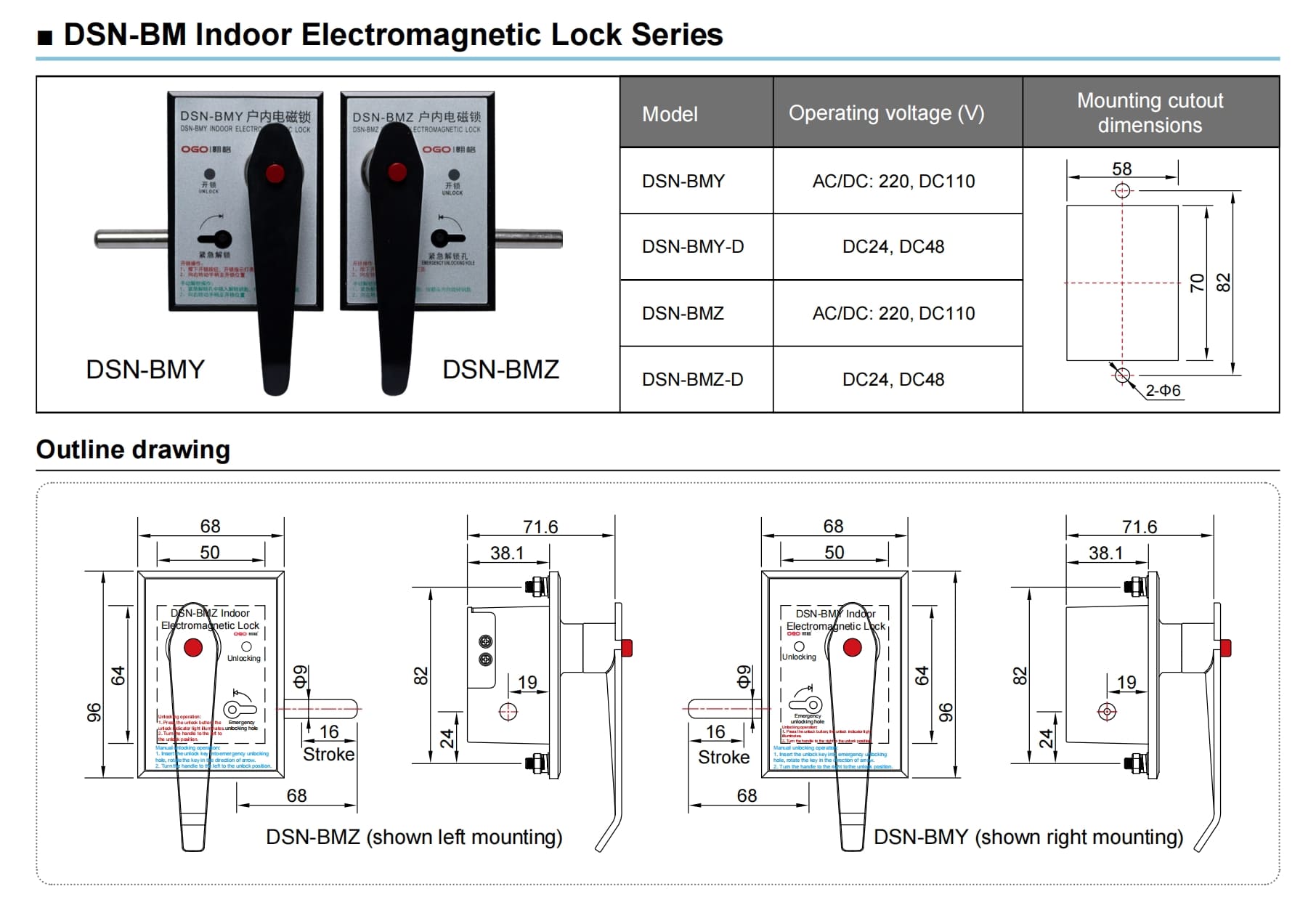
The product drawing identifies DSN-BMZ for left mounting and DSN-BMY for right mounting. In its front views, the BMZ bolt projects right and the BMY bolt projects left. Use that viewing convention when marking your cabinet sketch. The -D versions cover the lower DC voltage options in the table. Confirm the quoted coil configuration against the actual control supply before ordering. For example, a 24 V DC circuit calls for confirmation of the corresponding -D configuration. Add the chosen side and supply to the purchase specification so both remain visible during incoming inspection.
Model options listed in the product drawing
| Model | Mounting side shown | Bolt direction in front view | Supply options |
|---|---|---|---|
| DSN-BMZ | Left | Right | 220 V AC, 220 V DC, 110 V DC |
| DSN-BMZ-D | Left | Right | 24 V DC or 48 V DC |
| DSN-BMY | Right | Left | 220 V AC, 220 V DC, 110 V DC |
| DSN-BMY-D | Right | Left | 24 V DC or 48 V DC |
Will the Existing Door Opening Work?
The DSN-BM product drawing shows a 58 × 70 mm opening. Its two 6 mm fixing holes sit 82 mm apart vertically. The outline views call out a 16 mm bolt stroke. Compare those dimensions with the actual panel and its mounting face. Measure rear clearance with adjacent ducts and wiring in place. Check whether you can reach the fasteners after installation. Finally, confirm panel thickness, opening tolerance, and the exact supplied variant with the approved drawing. For a retrofit, include a marked photo of the original opening in the review.
How Much Bolt Engagement Does the Door Need?
The required engagement comes from the cabinet design and the geometry of the receiving bracket. Measure the bolt's overlap with that bracket when the door closes in its normal position. Include the door gap, hinge play, and bracket adjustment range in the fit review. During an approved check, compare engagement with the door resting naturally and with its normal latching load. A shifted door can change the alignment even when the lock's fixing holes remain correct. After release, verify that the bolt clears the receiving surface. Use the cabinet drawing's acceptance limits to approve the final position.
How Does the DSN-BM Electromagnetic Lock Operate?
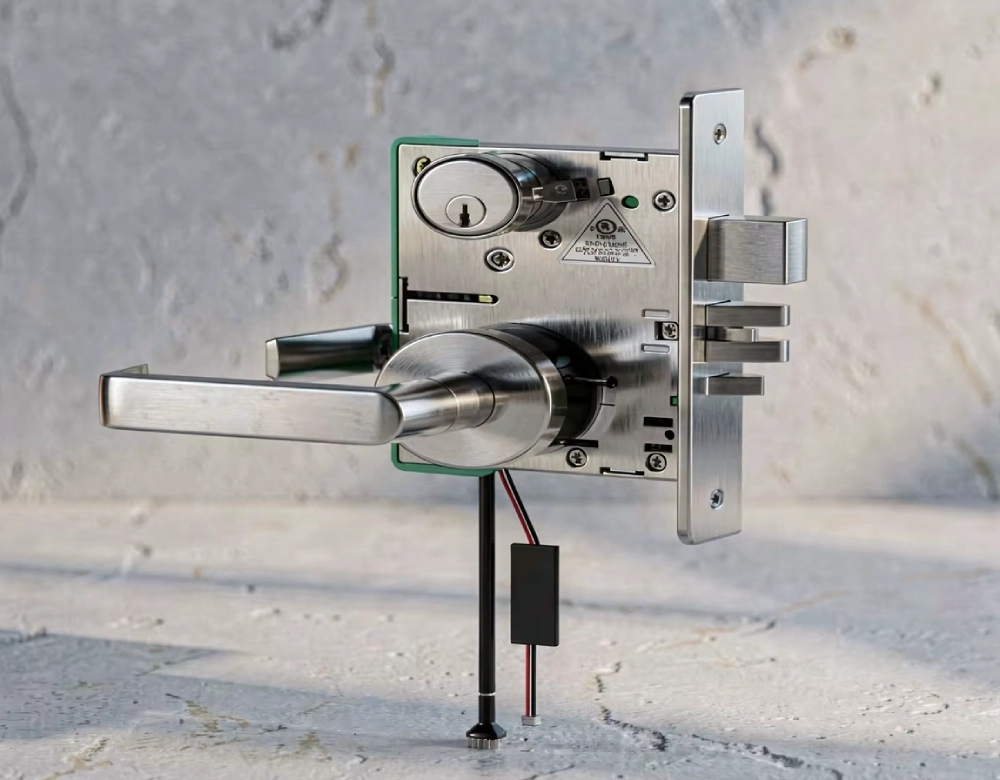
Follow the cabinet schematic to establish which contact conditions permit release. In an electrically released configuration, the coil clears the internal restraint when that circuit grants permission. The operator then moves the handle through the specified travel. Check the supplied instructions for handle direction, return action, and any position retention feature. During a functional test, observe the bolt as well as the front indicator. Once the door returns to its normal position, verify that the bolt re-engages the receiving bracket. Record how any fitted feedback contact responds. Match each observation to the cabinet's documented sequence.
Can a Different DSN Model Replace the Handle Lock?
Begin a replacement review with the installed unit's nameplate and the cabinet drawings. The DSN-AM indoor lock provides another configuration for reviewing door interlock requirements. Compare its operator action, bolt geometry, electrical authorization, and fixing layout with the original. Check whether the proposed handle or actuator has enough working space beside the door frame. Include any feedback contacts and their terminal assignments in the comparison. A replacement that changes the release or return sequence needs cabinet engineering review. Keep the accepted model code and revised drawings with the maintenance record.
What Should You Check When the Handle Sticks?
For a sticking DSN-BM Electromagnetic Lock, record whether the door presses against the bolt. Note the handle position and indicator state. Qualified maintenance staff can then follow the approved procedure to check electrical permission and coil response. If the coil actuates, inspect the alignment between the bolt and receiving bracket under safe maintenance conditions. Look for rubbing marks, loose fixings, hinge wear, or a change in the door gap. A handle that binds only with the door closed directs attention to the door and bracket alignment. Compare those findings with the original fit record before making adjustments or selecting a replacement.
Frequently Asked Questions
How do I choose between BMZ and BMY?
Use the front viewing convention on the product drawing and mark the lock position on your cabinet sketch. BMZ shows left mounting with its bolt pointing right. BMY shows right mounting with its bolt pointing left. Place the receiving bracket on the sketch as well. Then trace where the bolt must extend to hold the door. Include handle clearance beside the frame and nearby equipment. For an existing cabinet, provide a front photo and an internal mounting photo with the order. Ask the supplier to confirm the exact orientation on the quoted drawing.
What happens when the control power fails?
The expected response depends on the coil arrangement, bolt position, and cabinet interlocking circuit. In an electrically released configuration, loss of power can prevent a new release command from clearing the internal restraint. Check the documented behavior with the bolt both engaged and withdrawn. Review what should happen when the auxiliary supply returns, including any fitted feedback contact. The maintenance procedure should also identify who can authorize an emergency release. Follow the supplied operating instructions and the site's access procedure for that situation. Record the observed response during the approved commissioning checks.
What information should I send for a replacement quotation?
Send the full model code, coil nameplate photo, and the cabinet's available auxiliary supply. Include the opening size, fixing hole spacing, panel thickness, and a marked mounting view. Show the receiving bracket and the bolt's engagement when the door closes normally. Add the cabinet schematic and identify any feedback contacts the control circuit uses. If sticking prompted the replacement, describe when it occurs and include photos of wear marks. Request confirmation of the proposed dimensions, coil configuration, operator action, and return sequence. Those details help engineering and purchasing review the same configuration.